

Sensex Tumbles 429 Points, Nifty Slips Below 22,650 As RBI Hikes Repo Rate To 5.5%
October 7, 2026 | by NammaStockMarket
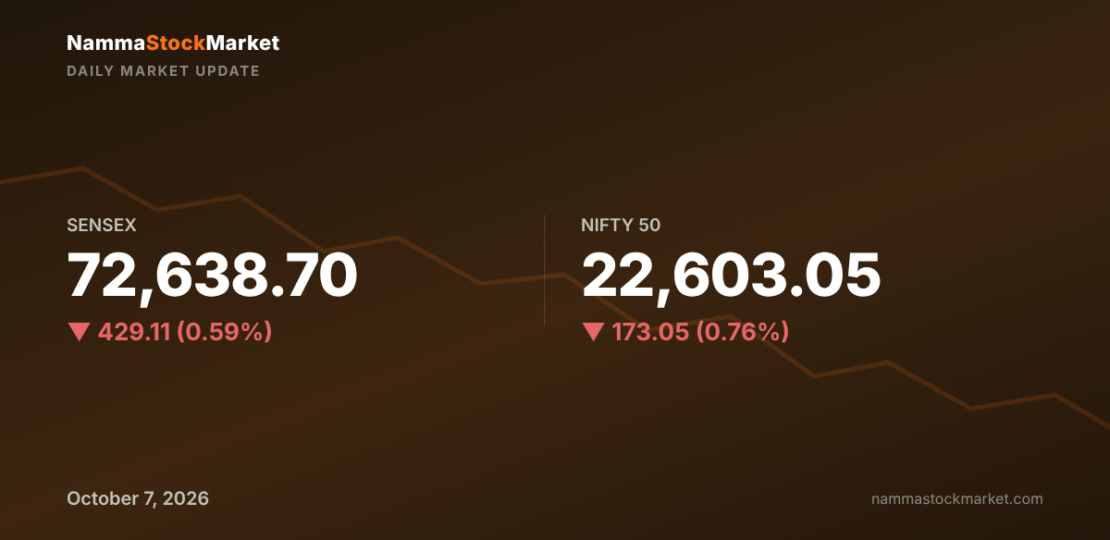
The Indian stock market hit a speed bump today after the RBI pulled a surprise. The BSE Sensex closed at 72,638.70, down 429.11 points or 0.59%, and the NSE Nifty 50 ended at 22,603.05, down 173.05 points or 0.76%. Both indices had been on a two-day winning run going into today, and that run came to a sharp halt the moment the Reserve Bank of India (RBI) announced it was raising the repo rate by 25 basis points to 5.50%, its first hike in nearly three and a half years. If you’re newer to the market, the repo rate is simply the rate at which RBI lends money to banks — when it goes up, loans become costlier for everyone, from companies to people buying a car or a house, and that usually makes investors a bit nervous.
The RBI didn’t just hike the rate, it also changed its policy stance to “calibrated tightening” from neutral, which in plain words means the central bank is signalling more rate hikes could be on the way if inflation doesn’t cool off. That one line spooked rate-sensitive sectors like auto, realty and consumer durables, and it also pushed the rupee to a five-month low against the US dollar. More on that in a bit. Fourteen of the sixteen major sectoral indices on the NSE ended in the red today, so this was a fairly broad-based selloff, not just one or two sectors dragging the index down.
Market At A Glance
| Index | Close | Points Change | % Change |
|---|---|---|---|
| BSE Sensex | 72,638.70 | ▼ 429.11 | ▼ 0.59% |
| NSE Nifty 50 | 22,603.05 | ▼ 173.05 | ▼ 0.76% |
| Bank Nifty | 54,730.05 | ▼ 398.35 | ▼ 0.72% |
| Nifty Midcap 100 | 59,397.10 | ▼ 364.10 | ▼ 0.61% |
| Nifty Smallcap 100 | 19,506.95 | ▲ 58.25 | ▲ 0.30% |
| India VIX | 13.88 | ▲ 0.27 | ▲ 1.98% |
All closing figures are for today’s session on the NSE and BSE. India VIX (the “fear gauge” that shows how much volatility traders expect in the next 30 days) rose along with the selling, which is normal on a day like this.
Why The Market Moved
Let’s break down why a rate hike hits your portfolio the way it did today. When the RBI raises the repo rate, banks have to pay more to borrow money, and they pass that cost on to you and me through higher loan EMIs — home loans, car loans, business loans, all of it gets a bit pricier. That means people and companies tend to spend and borrow less, which can slow down growth. Stock prices are basically a bet on how much companies will earn in the future, so when growth looks like it might slow down, investors mark down what they’re willing to pay for those future earnings today. That’s why you saw auto, realty and consumer durable stocks — all sectors that depend heavily on borrowed money — take the biggest hit today.
The RBI didn’t do this out of nowhere though. It raised its inflation forecast for the coming financial year to 5.2%, and a big part of that worry is coming from crude oil prices, which have been climbing due to supply concerns in the Middle East. Here’s the India-specific angle on why that matters so much to us: India imports close to 85% of the crude oil it uses, so when oil gets expensive on the world market, India’s oil import bill goes up, which means more dollars flowing out of the country and more pressure on the rupee. A weaker rupee in turn makes imported goods — including that oil — even more expensive in rupee terms, which feeds back into inflation. It’s a loop, and today’s rate hike was RBI’s way of trying to break it before it gets worse.
Which Sectors Held Up, And Which Didn’t
| Sector | % Change |
|---|---|
| Nifty PSU Bank | ▲ 0.92% |
| Nifty Media | ▲ 0.60% |
| Nifty Private Bank | ▲ 0.13% |
| Nifty Oil & Gas | ▼ 0.51% |
| Nifty FMCG | ▼ 0.99% |
| Nifty IT | ▼ 1.31% |
| Nifty Consumer Durables | ▼ 1.32% |
| Nifty Auto | ▼ 1.44% |
| Nifty Realty | ▼ 1.85% |
| Nifty Metal | ▼ 2.31% |
Only three of the ten sectors we track ended in the green today, and it’s telling that two of them were banking-related. PSU bank stocks actually gained almost 1% — a bit counterintuitive given the rate hike, but higher rates usually mean banks earn more on the loans they give out, which is why lenders as a group didn’t get hit as hard as borrowers did. Metal stocks had the worst day by far, down over 2%, as a stronger dollar and fears of slower growth both work against industrial metal demand. If you’re holding IT stocks, today wasn’t great either — the sector fell 1.31% on worries that a stronger rupee could eventually hurt IT companies’ dollar earnings when converted back to rupees, though right now the rupee is actually weakening, not strengthening, so this looks more like broad risk-off selling pulling IT down along with everything else.
Today’s Top Movers
Here’s where the selling was concentrated and where investors found some comfort today.
| Top Gainers (Nifty 50) | % Change |
|---|---|
| Kotak Mahindra Bank | ▲ 1.88% |
| BSE Ltd | ▲ 1.54% |
| Bharti Airtel | ▲ 1.29% |
| ICICI Bank | ▲ 1.09% |
| Coal India | ▲ 0.69% |
| Top Losers (Nifty 50) | % Change |
|---|---|
| Titan Company | ▼ 3.80% |
| Adani Enterprises | ▼ 3.75% |
| Hindalco Industries | ▼ 3.15% |
| Bharat Electronics | ▼ 2.35% |
| JSW Steel | ▼ 2.35% |
Titan led the losers, down nearly 4%, dragged by the broader hit to consumer durables and jewellery demand worries if loans get costlier. Adani Enterprises and the metal pack — Hindalco and JSW Steel — fell on the double whammy of a stronger dollar and growth worries. On the gaining side, it’s almost entirely banks: Kotak Mahindra Bank and ICICI Bank both moved up as the market bet that higher rates will widen the gap between what banks earn on loans and what they pay out on deposits, which is good news for their profits.
What FIIs and DIIs Were Doing
You’ll often see FII and DII numbers in market reports, so here’s a quick explainer if you’re new to this: FII stands for Foreign Institutional Investor — big foreign funds that buy and sell Indian stocks — and DII stands for Domestic Institutional Investor, which covers Indian mutual funds, insurance companies and similar big local players. When you track where their money is flowing, you get a sense of who’s driving the market on any given day.
Today’s official FII/DII cash segment figures weren’t out at the time of publishing — these numbers usually come in after market hours — so here’s the most recent data we have, clearly dated:
| Date | FII Net (₹ Crore) | DII Net (₹ Crore) |
|---|---|---|
| October 6, 2026 | ▼ ₹2,961.30 cr sold | ▲ ₹5,088.92 cr bought |
| October 5, 2026 | ▼ ₹4,699.14 cr sold | ▲ ₹5,181.62 cr bought |
| October 1, 2026 | ▼ ₹9,484.22 cr sold | ▲ ₹10,041.84 cr bought |
Note: these are the last three available trading sessions’ cash-segment figures (October 6, 5 and 1) — today’s (October 7) FII/DII numbers hadn’t been released yet when this article was published, so we’ve avoided presenting any of these as today’s data. The pattern over the past several sessions is clear though — FIIs have been steady net sellers while DIIs, largely domestic mutual funds running your SIP (systematic investment plan) money, have been absorbing almost all of that selling pressure and then some. This is actually a reassuring sign for retail investors: DII buying, a lot of which comes from the SIP money regular Indians invest every month through their demat and trading accounts, has been cushioning the market against foreign outflows. Without that steady domestic support, today’s fall driven by the RBI’s surprise hike could easily have been sharper.
Oil, The Rupee, And Global Cues
Brent crude (the global benchmark for oil prices, always quoted in US dollars per barrel) climbed to around $101.70 a barrel today, up about 1%, on reports that a storm threatens US oil output and that there have been fresh attacks near Saudi Arabia’s oil infrastructure, both of which raise worries about supply getting tighter. For India, which imports roughly 85% of its crude needs, pricier oil is never good news — it widens the country’s oil import bill, pressures the rupee since we need more dollars to pay for the same amount of oil, and adds to inflation, which is exactly the loop RBI is trying to get ahead of with today’s rate hike.
Speaking of the rupee, the USD/INR pair closed around ₹96.77 to the dollar today, about 35 paise weaker than before, touching its lowest level in roughly five months. Three things piled up against the rupee today: the RBI’s rate hike itself created some short-term uncertainty, the US dollar has been broadly strong globally (the dollar index was trading near multi-month highs), and the rising oil prices we just talked about mean more dollar demand from Indian oil importers. None of this is only an abstract number on a screen — a weaker rupee makes everything India imports more expensive, from crude oil to electronics, and that eventually shows up in the prices you pay at the pump and in stores.
On global cues, there wasn’t a major US market trigger overnight, but global bond yields have stayed elevated, which tends to pull money away from riskier assets like emerging-market stocks, including ours. When US Fed policy expectations shift or global yields move, foreign investors often rebalance their India exposure, and that was part of the backdrop to today’s FII selling pattern as well.
What To Watch Tomorrow
With the RBI decision now out of the way, the market’s attention will likely shift to how banks react on their lending and deposit rates, and whether the “calibrated tightening” language means another hike is coming soon or if this was a one-off move to get ahead of inflation. Auto and realty stocks, which took the hardest hits today on rate-hike worries, are worth watching to see if they stabilize or extend their fall as more details from RBI’s policy commentary get parsed by analysts. Crude oil remains the other big swing factor — if the Middle East supply concerns ease, oil and the rupee could both find some relief, which would take pressure off the market. Keep an eye on the India VIX too; it ticked up today to 13.88, still a fairly calm level historically, but a sustained move higher would signal more nervousness setting in. This is market commentary for information only, not investment advice — do your own homework or speak to a financial advisor before making any buy or sell decisions.
RELATED POSTS
View all

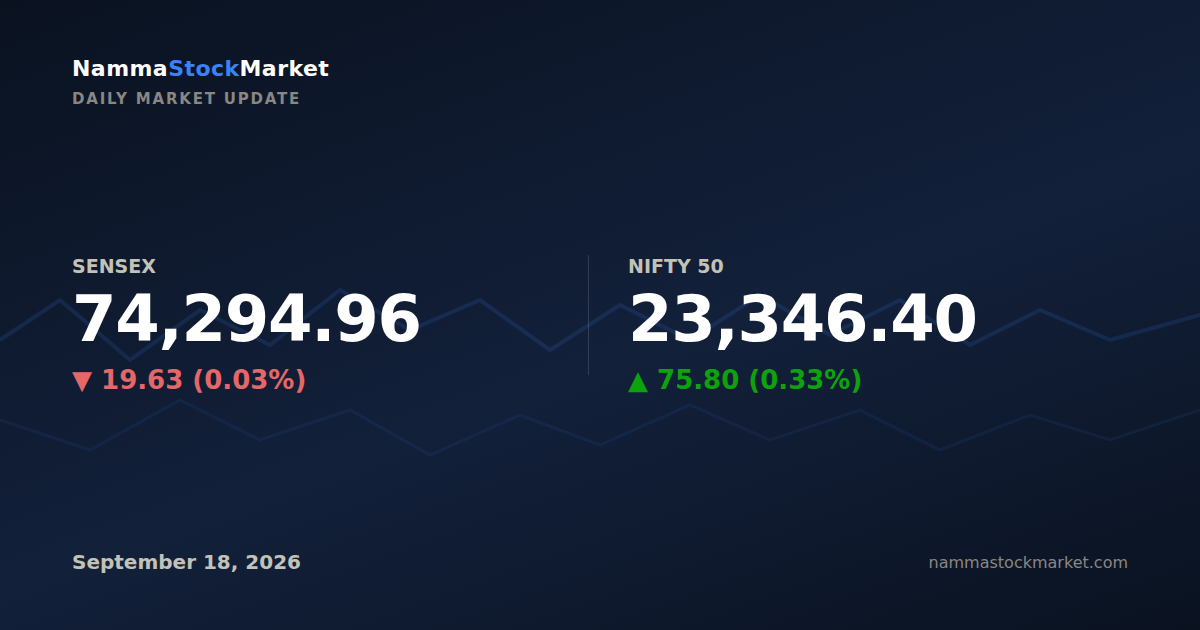
Nifty Ends Higher At 23,346 As Smallcaps Jump 1.7%, But TCS Crash Drags Sensex Into The Red
September 18, 2026 | by NammaStockMarket
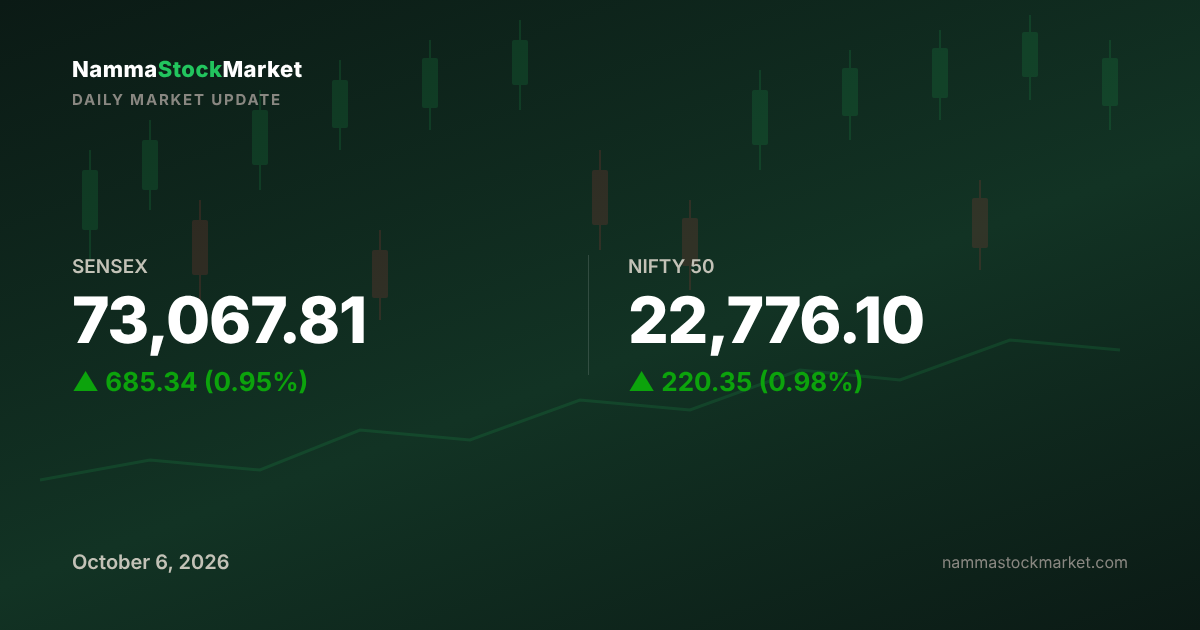
Sensex Jumps 685 Points, Nifty Closes Above 22,750 As Markets Rally Ahead Of RBI Rate Decision
October 6, 2026 | by NammaStockMarket
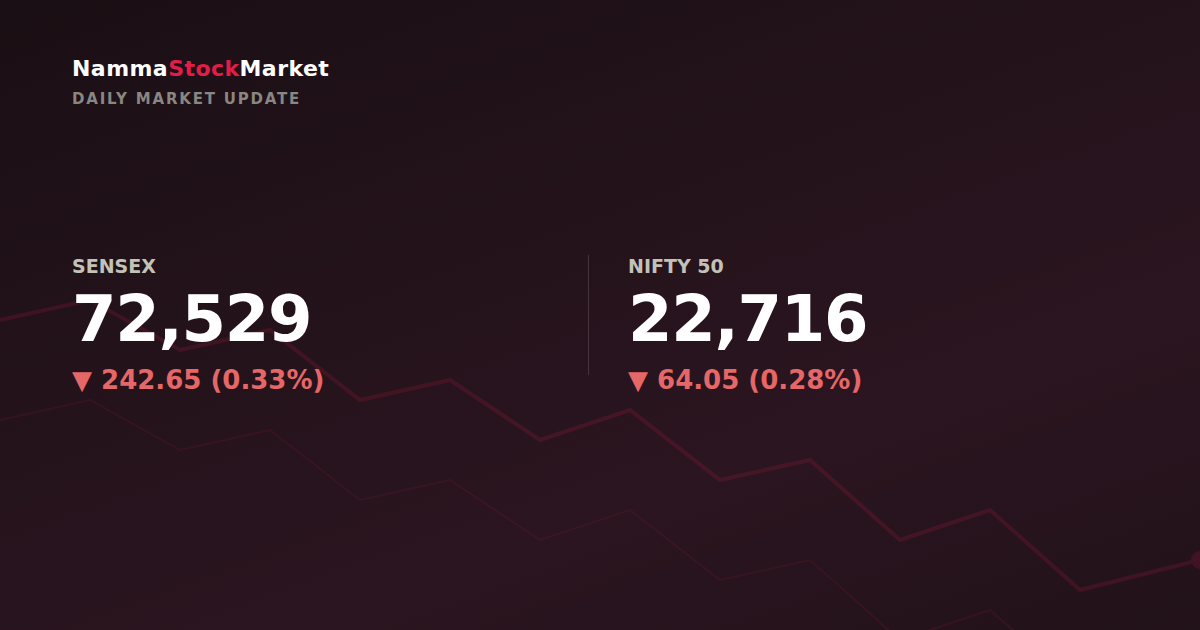
Sensex Falls 243 Points, Nifty Ends Below 22,750 As Tata Sons Restructuring Plan Rattles Tata Group Stocks
September 29, 2026 | by NammaStockMarket