

Sensex Jumps 315 Points, Nifty Back Above 23,140 As Bargain Buying Returns After Brutal Selloff
September 25, 2026 | by NammaStockMarket
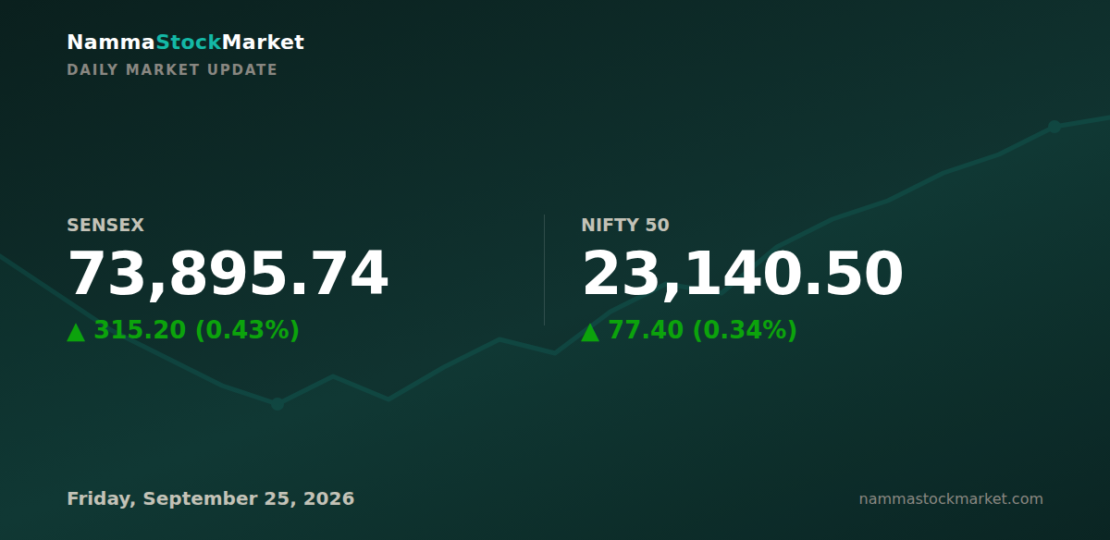
After a week that left a lot of portfolios bruised, the Indian stock market finally caught a breather today. The BSE Sensex closed at 73,895.74, up 315.20 points or 0.43%, while the NSE Nifty 50 ended at 23,140.50, up 77.40 points or 0.34%. If you were watching your screen turn red for most of this week, today’s green close probably felt like a relief, even if it wasn’t a huge one.
The bounce came mostly from bargain hunting. A day earlier, on Thursday, the market had its worst session in more than six months, with the Sensex crashing nearly 1,000 points and the Nifty slipping to a five-month low as banks and NBFCs got hammered. So today’s gain is really investors picking up quality stocks that fell too fast, rather than a sign that all the worry has gone away. In fact, the Nifty is still sitting on its longest weekly losing streak since 2020, having ended lower for seven weeks in a row before this Friday’s bounce. Two big things helped sentiment today: crude oil prices cooled off on hopes of an Iran ceasefire deal, and the rupee strengthened a bit as a result. Auto, realty and consumer durables stocks led the charge, while IT and pharma stayed weak and capped how far the market could climb.
Market At A Glance
Here’s how the major indices closed today, September 25, 2026:
| Index | Close | Change | % Change |
|---|---|---|---|
| BSE Sensex | 73,895.74 | ▲ 315.20 | ▲ 0.43% |
| NSE Nifty 50 | 23,140.50 | ▲ 77.40 | ▲ 0.34% |
| Bank Nifty | 55,580.40 | ▲ 141.90 | ▲ 0.26% |
| Nifty Midcap 100 | — | ▼ — | ▼ 0.14% |
| Nifty Smallcap 100 | — | ▲ — | ▲ 0.15% |
| India VIX | 12.13 | ▼ 0.53 | ▼ 4.18% |
Note: exact closing levels for Nifty Midcap 100 and Nifty Smallcap 100 weren’t available from our sources at the time of writing, so only their % change is shown above.
Why The Market Moved
If you’re newer to investing, here’s the simple version of what happened today. On Thursday, the Indian share market had a rough day because of two things: crude oil prices had spiked and US bond yields (interest rates on US government debt) had gone up sharply, which made global investors nervous about riskier assets like Indian stocks. Bank Nifty stocks, in particular, got sold off hard.
Today, some of that pressure eased. There were reports that the US and Iran are working on a plan to end the fighting between them, and that calmed down worries about oil supply from the Middle East. Brent crude, the global benchmark for oil prices which is always quoted in US dollars per barrel, fell to around $105.40 a barrel, down a little over 1% for the day.
Why does crude oil even matter for the Indian stock market? India imports more than 80% of the oil it uses, and it pays for that oil in dollars. So when crude oil gets expensive, India’s import bill goes up, which puts pressure on the rupee and adds to inflation worries at home. When crude falls, like it did today, it’s genuinely good news for India: it helps the rupee, and it takes some pressure off companies that use fuel and oil-based inputs, from airlines to paint makers to logistics firms. That’s a big reason why you saw the rupee strengthen today, closing near 95.80 to the dollar compared with 95.99 previously, a gain of about 19 paise.
The other backdrop worth knowing about is India VIX, which is often called the market’s “fear gauge.” It measures how much volatility, or ups and downs, traders expect in the Nifty over the next 30 days. A higher VIX means more nervousness, a lower one means calmer waters ahead. VIX had spiked nearly 23% on Thursday as the selloff hit, but today it cooled off sharply, falling 4.18% to 12.13. That drop in VIX tells you that the panic from Thursday has eased for now, even if the underlying worries about oil prices and global interest rates haven’t fully gone away.
Which Sectors Held Up, And Which Didn’t
It was a fairly selective rally today, not a broad “everything goes up” kind of day. Here’s how the major sectors performed:
| Sector | % Change |
|---|---|
| Consumer Durables | ▲ 0.95% |
| Realty | ▲ 0.92% |
| Auto | ▲ 0.89% |
| Financial Services | ▲ 0.56% |
| FMCG | ▲ 0.40% |
| Metal | ▲ 0.35% |
| Energy | ▲ 0.21% |
| Pharma | ▼ 0.10% |
| IT | ▼ 0.17% |
Consumer Durables was the star of the show, helped along by stocks like Whirlpool of India and Blue Star, which investors piled into after this week’s beating. Realty and Auto weren’t far behind, both getting support from value buying, meaning investors saw good companies trading cheap after the recent fall and decided to step in. Financial Services also recovered some lost ground after Thursday’s battering, with private banks like Axis Bank and HDFC Bank leading the way back up. On the other side, IT and Pharma stayed under pressure. IT stocks have been the weak link in the market all through 2026, dragged down by worries about US tech spending and a stronger dollar making Indian IT export revenues less predictable in rupee terms. If you’re holding IT stocks in your demat account right now, today was another day of watching your other sector holdings do the heavy lifting instead.
Today’s Top Movers
Axis Bank led the gainers on the Nifty 50, rising 2.14% as banking stocks bounced back hard from Thursday’s rout. Asian Paints and Mahindra & Mahindra also had a strong day, both benefiting from the broader value-buying theme in autos and consumption names. HCL Technologies made it onto the gainers list too, bucking the weak trend in the rest of the IT pack.
| Stock (Top 5 Gainers) | % Change |
|---|---|
| Axis Bank | ▲ 2.14% |
| Asian Paints | ▲ 1.48% |
| Mahindra & Mahindra | ▲ 1.19% |
| HCL Technologies | ▲ 1.13% |
| Coal India | ▲ 0.71% |
On the losers side, Max Healthcare Institute was the worst performer, falling over 3% for reasons specific to the stock rather than the broader market. Tata Motors Passenger Vehicles and Trent also had a tough day, and Infosys continued to feel the weight of the IT sector’s troubles. ONGC slipped too, even though falling crude prices are usually good news for oil marketing companies and bad news for oil producers like ONGC, since cheaper crude means lower realisations on the oil it sells.
| Stock (Top 5 Losers) | % Change |
|---|---|
| Max Healthcare Institute | ▼ 3.37% |
| Tata Motors Passenger Vehicles | ▼ 2.00% |
| Trent | ▼ 1.85% |
| Infosys | ▼ 1.79% |
| ONGC | ▼ 1.42% |
One stock worth calling out even though it isn’t in the Nifty 50: Transport Corporation of India (TCI) shares rallied around 15% today after the company announced a share buyback proposal, which is when a company offers to purchase back its own shares from shareholders, usually seen as a signal that management thinks the stock is undervalued. It’s a good reminder that even on a mixed, choppy week, individual stock stories can still deliver big single-day moves. On the flip side, a handful of large names including Reliance Industries, PB Fintech, Hindustan Unilever, and Maruti Suzuki actually touched fresh 52-week lows during the session, even as the overall market closed higher, a sign that the recovery is still patchy rather than across the board.
What FIIs and DIIs Were Doing
You’ll often see the terms FII and DII in market reports, so here’s a quick explainer if you’re not familiar with them. FIIs, or Foreign Institutional Investors (sometimes also called FPIs, or Foreign Portfolio Investors), are big global funds and institutions investing in Indian markets from outside the country. DIIs, or Domestic Institutional Investors, are Indian institutions like mutual funds, insurance companies (think LIC) and pension funds investing money raised from Indian investors, including the monthly SIP (systematic investment plan) money that flows in from retail mutual fund investors like you every month.
Today’s official FII/DII cash market figures for September 25 hadn’t been released at the time of writing; these numbers usually come out later in the evening. Here’s what the data looked like over the last few trading sessions:
| Date | FII/FPI Net (₹ Crore) | DII Net (₹ Crore) |
|---|---|---|
| 25 Sep 2026 (Fri) | Not out yet | Not out yet |
| 24 Sep 2026 (Thu) | ▼ ₹5,027.36 Cr | ▲ ₹4,301.18 Cr |
| 23 Sep 2026 (Wed) | ▲ ₹1,617.45 Cr | ▲ ₹3,958.91 Cr |
| 22 Sep 2026 (Tue) | ▼ ₹3,809.99 Cr | ▲ ₹310.08 Cr |
| 21 Sep 2026 (Mon) | ▼ ₹576.20 Cr | ▲ ₹2,221.07 Cr |
| 18 Sep 2026 (Fri) | ▲ ₹599.54 Cr | ▲ ₹1,619.23 Cr |
The pattern here is worth noticing. FIIs have been net sellers on three of the last five sessions shown above, including a hefty ₹5,027 crore outflow on Thursday, right when the market was falling hardest. DIIs, on the other hand, have been net buyers on every single one of these days, and that’s not a coincidence. This is the same pattern you’ll see again and again in the Indian stock market: when foreign money gets nervous and heads for the exit, domestic mutual funds, insurance money and your own SIP contributions tend to step in and buy the dip. It’s one of the big structural changes in the Indian share market over the last several years, and it’s a big part of why the market hasn’t fallen as hard as it might have purely on FII selling alone.
Oil, The Rupee, And Global Cues
Brent crude oil, the international benchmark that Indian refiners largely track, eased to around $105.40 a barrel today, down a little more than 1%, extending its retreat from the highs it touched earlier this month when it briefly crossed $100 and kept climbing on Middle East tensions. The move lower today came on reports that the US and Iran are working toward a phased deal to end their conflict, which reduced worries about oil supply disruptions from the region. Even though crude is still elevated by the standards of the past couple of years, any relief on this front is a genuine positive for India, because a big chunk of our oil import bill directly affects how much pressure builds up on the rupee.
The rupee itself gained 19 paise against the dollar to close near 95.80, compared with the previous close of 95.99, tracking the fall in crude and a slightly weaker dollar index, which dropped 0.18% to 101.10. That said, dollar demand from local importers stayed steady, and a hawkish tone from the US Federal Reserve on interest rates kept a floor under the dollar, so the rupee’s gains weren’t dramatic. There was also chatter about the Reserve Bank of India possibly stepping in if the rupee strengthens too quickly past the 96 mark, which is a reminder that the RBI keeps a close watch on excessive volatility in either direction, not just rupee weakness.
On the global cues front, it’s worth remembering that when we talk about US markets like the Dow or the Nasdaq moving, or the US Fed’s interest rate decisions, these matter for Nifty and Sensex because Indian markets don’t trade in isolation. Higher US interest rates make US bonds more attractive to global investors relative to emerging markets like India, which is one reason FIIs sometimes pull money out of India when US yields rise, exactly what happened earlier this week. Keeping an eye on these global cues, alongside crude oil and the rupee, gives you a much better sense of why the Indian stock market moves the way it does on any given day, rather than just looking at Nifty and Sensex in isolation.
What To Watch Tomorrow
September F&O (futures and options) contracts are set to expire on September 29, this coming Tuesday, so expect some extra volatility and stock-specific action as traders roll over their positions from the September series to October. The Nifty September futures were trading at a premium of about 49.50 points over the cash market today, which is generally read as a mildly bullish signal for near-term sentiment, though it’s not something to bet a trading decision on by itself.
Crude oil and any further news on the US-Iran talks will likely keep driving sentiment in the days ahead, since that’s been the main swing factor this week. Keep an eye on Bank Nifty and financial stocks too, since they were the epicentre of Thursday’s selloff and today’s recovery both, which tells you they remain the most sensitive part of the market right now. IT stocks look like the more exposed pocket of the market heading into next week, given the sector has been the weakest performer through most of 2026, while Auto, Realty and Consumer Durables look relatively more resilient if the value-buying theme continues. As always, this is general market information and not investment advice, so do your own homework or speak with a qualified advisor before making any buy or sell decisions with your money.
RELATED POSTS
View all

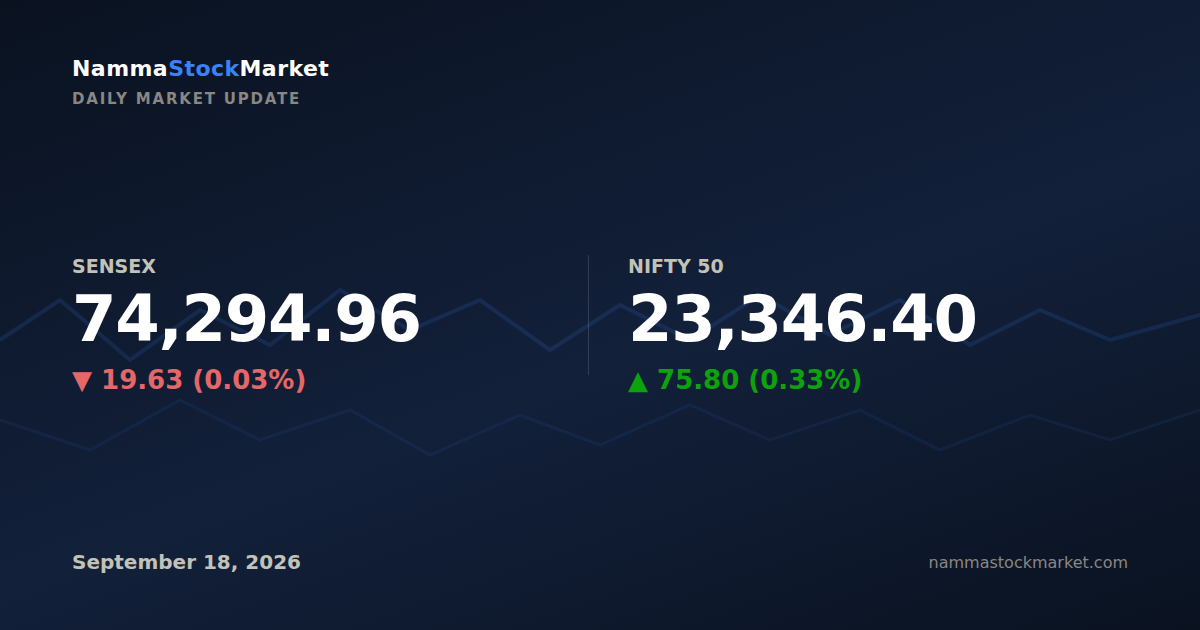
Nifty Ends Higher At 23,346 As Smallcaps Jump 1.7%, But TCS Crash Drags Sensex Into The Red
September 18, 2026 | by NammaStockMarket
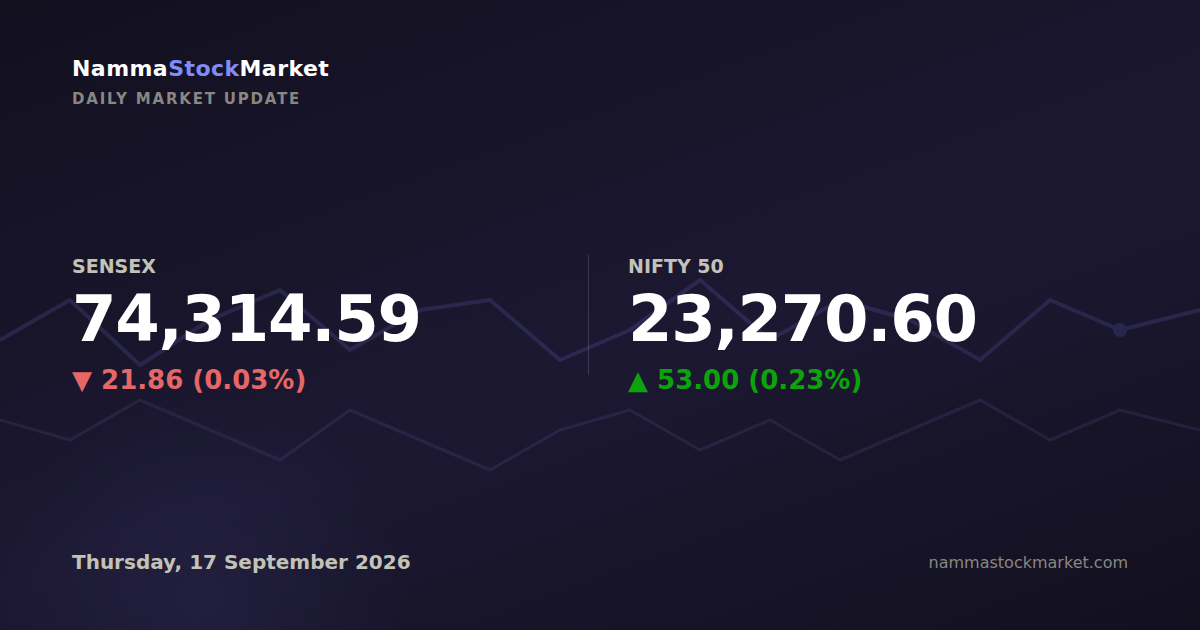
Sensex Ends Nearly Flat, Nifty Closes At 23,270 As Pharma, Realty Rally While Fed Rate Hike Hits IT And Bank Stocks
September 17, 2026 | by NammaStockMarket
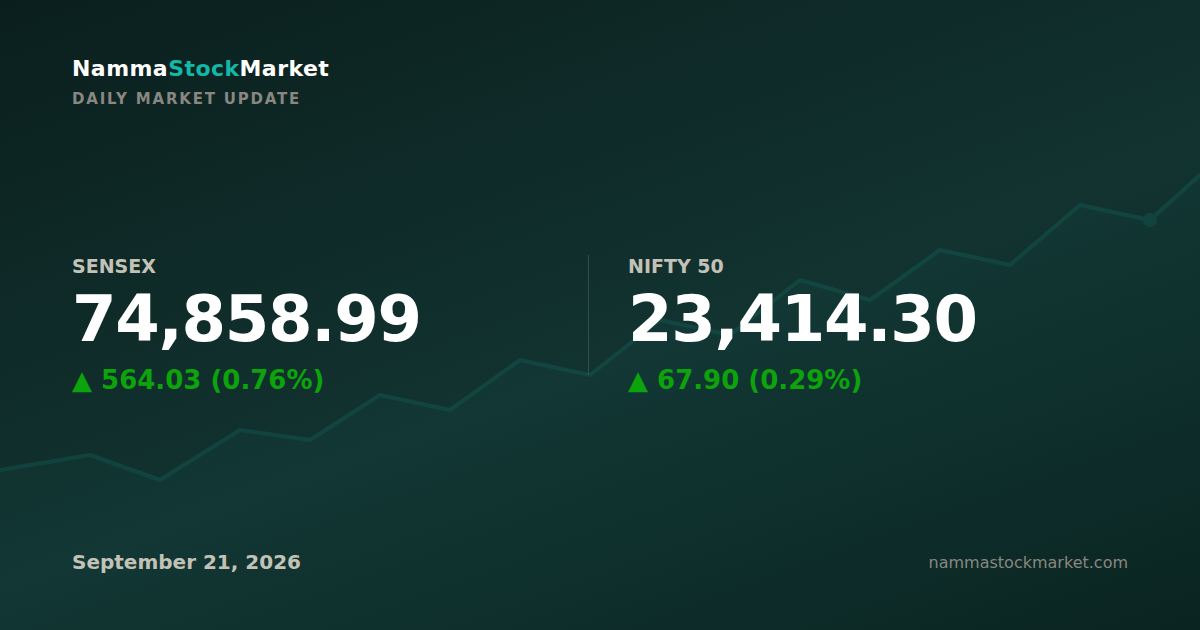
Sensex Jumps 564 Points, Nifty Reclaims 23,400 As Cooling Crude Oil Lifts Sentiment
September 21, 2026 | by NammaStockMarket