

Sensex Rallies 483 Points, Nifty Back Above 22,750 as Metal and Pharma Stocks Lead the Rebound
October 26, 2026 | by NammaStockMarket
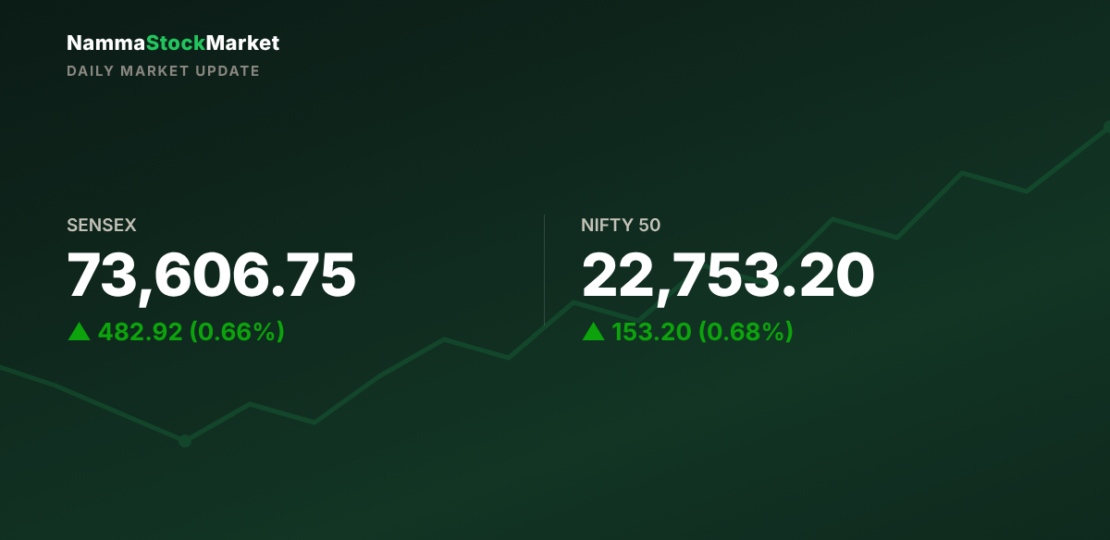
After four straight days of losses, the Indian stock market finally got some breathing room today. The BSE Sensex (the 30-stock index on the Bombay Stock Exchange) closed at 73,606.75, up 482.92 points or 0.66%, while the NSE Nifty 50 (the 50-stock index on the National Stock Exchange) ended at 22,753.20, up 153.20 points or 0.68%. If you checked your demat account in the morning and got a little worried because the market had opened weak, you can relax now, things turned around nicely by the closing bell. Metal and pharma stocks did the heavy lifting today, while IT heavyweights like Infosys and HCL Tech had dragged the market down in early trade before the broader rally pulled things back up.
This bounce comes after a genuinely rough week for the Indian stock market. The Nifty and Sensex had fallen close to 2.3% and 2.1% respectively last week, so today’s gain of nearly 0.7% is the market finally catching its breath. But don’t get too comfortable, because India VIX, which is basically the market’s “fear gauge” and tells you how much volatility traders are expecting in the days ahead, was still up over 1.6% today at 17.13, after touching 18.00 at one point during the session. That’s a sign that nerves are still a bit on edge even though the headline numbers look good.
Market At A Glance
| Index | Close | Change | % Change |
|---|---|---|---|
| BSE Sensex | 73,606.75 | ▲ 482.92 | ▲ 0.66% |
| NSE Nifty 50 | 22,753.20 | ▲ 153.20 | ▲ 0.68% |
| Nifty Midcap 100 | — | — | ▲ 1.19% |
| Nifty Smallcap 100 | — | — | ▲ 1.38% |
| India VIX | 17.13 | ▲ 0.27 | ▲ 1.6% |
Note: Bank Nifty’s official closing level wasn’t confirmed across our sources at the time of publishing, so it has been left out of the table above. Nifty Midcap 100 and Smallcap 100 closing index values also weren’t independently available by publish time, only their percentage moves are shown.
Why The Market Moved
So what actually turned things around today? Three things, mainly.
First, there was a report over the weekend that Houthi rebels claimed to have struck an Aramco facility at Yanbu and a refinery at Rabigh in Saudi Arabia, along with a target near Riyadh. Saudi Arabia hasn’t confirmed any of this, and the Saudi-led coalition says it intercepted the missiles before they could do damage. But just the fear of it was enough to push Brent crude oil prices (the global benchmark, always quoted in US dollars per barrel) to near $117 a barrel last week, the highest level since April. Today, with Qatari mediators reportedly in Tehran trying to calm things down, and signs that oil flows through the Middle East were getting back closer to normal, crude eased off its highs, which is actually good news for India.
Here’s why that matters for you even if you don’t track crude oil prices every day: India imports more than 80% of the oil it uses, so when crude gets expensive, our oil import bill goes up sharply. That puts pressure on the rupee because the country needs more dollars to pay for the same amount of oil, and it also stokes fears of inflation at home, since fuel costs feed into the price of almost everything else, from transport to packaged food. So when crude cools down even a little, like it did today, it takes some pressure off the rupee and off Indian companies that depend on oil and its by-products, and the market tends to breathe a bit easier.
Second, this is peak Q2 (July-September quarter) results season, and the market is reacting sharply to individual numbers. Stocks like Shriram Finance and Tata Consumer Products, which disappointed with their results, kept dragging, while stocks that beat expectations, like Dr Reddy’s Laboratories and JSW Steel, shot up and gave the index a real lift.
Third, global cues were mixed heading into the week. Asian markets were a touch weak on Monday morning as investors stayed cautious ahead of this week’s US Federal Reserve meeting, but domestic buying in beaten-down sectors like metals and pharma was strong enough to overcome that early hesitation and push the market into the green.
Which Sectors Held Up, And Which Didn’t
It was a broad-based rally today, with 10 out of 11 major sectoral indices on the NSE closing in the green. Here’s how the big ones stacked up:
| Sector (Nifty Index) | % Change |
|---|---|
| Metal | ▲ 2.2% |
| Pharma | ▲ 1.7% |
| Oil & Gas | ▲ 1.3% |
| Infrastructure | ▲ 0.5% |
| IT | ▲ 0.5% |
| Private Bank | ▲ 0.5% |
| Energy | ▲ 0.5% |
| Media | ▼ 0.5% |
Note: FMCG, consumer durables and chemical stocks also closed lower today, but exact closing percentages for these three sectors weren’t confirmed across our sources by publish time, so they’ve been left out of the table.
Metal stocks were clearly the stars of the day, rising around 2% as a pack, helped by JSW Steel’s strong earnings and renewed hopes that steel demand will pick up in the coming quarters. Pharma and healthcare stocks also had a good day, up close to 1.7%, after Dr Reddy’s posted a blockbuster set of numbers that pulled the whole pack higher along with it. Oil & gas stocks gained too, which sounds odd given that crude prices are the worry of the week, but some of these companies actually benefit from better refining margins, and the overall improved market mood lifted them along with everything else. On the other end, Nifty Media was the only sectoral index to close lower, down about half a percent, and FMCG, consumer durables and chemical stocks also ended in the red, as money rotated out of these steady, defensive names and into the sectors bouncing back hardest.
If your portfolio is tilted toward metals or pharma, today was clearly a good day for you. If you’re sitting mostly in FMCG or consumer durables stocks, you probably didn’t feel much of today’s rally, and your portfolio might even be marginally in the red.
Today’s Top Movers
Here are the Nifty 50 stocks that moved the most today, both up and down:
| Company | % Change |
|---|---|
| Dr Reddy’s Laboratories | ▲ 6.62% |
| JSW Steel | ▲ 6.28% |
| BSE Ltd | ▲ 3.97% |
| Adani Ports & SEZ | ▲ 2.92% |
| Eternal | ▲ 2.57% |
| Company | % Change |
|---|---|
| Shriram Finance | ▼ 4.62% |
| Tata Consumer Products | ▼ 2.84% |
| Bajaj Finance | ▼ 1.10% |
| HDFC Life Insurance | ▼ 0.91% |
| HDFC Bank | ▼ 0.69% |
Dr Reddy’s Laboratories was the standout gainer of the day, jumping over 6.6% after its Q2 results comfortably beat what analysts were expecting. JSW Steel wasn’t far behind, up over 6.2%, continuing to ride the wave from its own strong earnings announced last week. BSE Ltd, the company that runs the Bombay Stock Exchange itself, also had a strong session, gaining nearly 4%.
On the losing side, Shriram Finance was the biggest drag, falling close to 4.6%, likely on concerns about loan asset quality that came up after its results. Tata Consumer Products also slipped nearly 2.8%. A couple of large, usually steady names, Bajaj Finance and HDFC Bank, ended modestly lower too, even as the rest of the market rallied around them, which tells you some of the froth is being shaken out of stocks that had run up quite a bit earlier this year.
What FIIs and DIIs Were Doing
You’ll often hear market reports talk about FIIs and DIIs, so here’s a quick refresher if you’re newer to investing. FIIs are Foreign Institutional Investors, basically big foreign funds that buy and sell Indian stocks. DIIs are Domestic Institutional Investors, which is Indian money, mostly mutual funds, including the money that flows in every month from retail investors’ SIPs (Systematic Investment Plans), along with insurance companies. When you hear “FII selling” or “DII buying” in the news, people are talking about the net amount of money these two big groups put into or pulled out of the cash segment of the stock market that day.
Today’s official FII/DII figures for October 26 aren’t out yet (they’re usually released late in the evening or the next morning), so here’s the picture over the last five trading days for which data is available. Note that October 20 was a trading holiday for Dussehra, so there’s no entry for that date.
| Date | FII Net (₹ Crore) | DII Net (₹ Crore) |
|---|---|---|
| 23-Oct-2026 | ▲ ₹887.65 cr | ▲ ₹3,235.36 cr |
| 22-Oct-2026 | ▼ ₹3,458.70 cr | ▲ ₹2,891.32 cr |
| 21-Oct-2026 | ▲ ₹1,022.32 cr | ▲ ₹1,614.32 cr |
| 19-Oct-2026 | ▼ ₹1,148.64 cr | ▲ ₹3,201.19 cr |
| 16-Oct-2026 | ▲ ₹1,165.92 cr | ▼ ₹3,661.28 cr |
What jumps out here is that DIIs have been net buyers on four of the last five sessions, even on the one day FIIs sold heavily, October 22, when FIIs pulled out over ₹3,458 crore. This is the “DIIs cushioning FII selling” story you’ll hear a lot about in Indian markets these days, and it’s one big reason the market hasn’t fallen as hard as it otherwise might have during recent bouts of FII selling. Your own SIP money, in a small way, is part of that cushion. Over the whole month of October so far, FIIs have pulled out close to ₹51,466 crore while DIIs have pumped in about ₹59,110 crore, a pretty stark gap that shows just how much domestic money is holding up the Indian stock market right now.
Oil, The Rupee, And Global Cues
We touched on crude earlier, but let’s go a bit deeper. Brent crude settled around $114.50 to $114.65 a barrel today, down close to 2% from Friday’s settlement of $116.72, which itself was the highest closing level since April. The reason for the pullback: reports that Qatari mediators were in Tehran over the weekend trying to de-escalate tensions, plus comments from analysts that Middle Eastern oil flows were recovering toward more normal levels, which eased some of the panic that had been building after the Houthi attack claims.
The rupee, meanwhile, had a rough day, weakening to around ₹95.19 against the US dollar, down about 25 paise from Friday’s close of ₹94.94. That’s roughly 0.8% weaker over just the last three trading sessions. Dollar demand from oil importers, who need dollars to pay for crude, combined with the FII selling we talked about, has been putting steady pressure on the currency. A weaker rupee isn’t just an abstract number on a screen, it means imported goods, including crude oil, become more expensive in rupee terms, which can add to inflation and squeeze profit margins for companies that depend on imported raw materials.
What To Watch Tomorrow
Tomorrow, October 27, is going to be a busy day on the earnings front, with heavyweight names like Larsen & Toubro, Maruti Suzuki, Bajaj Auto and Cipla all reporting their Q2 results. Maruti’s numbers will be watched closely given how exposed the auto sector is to rural demand and input costs, while L&T’s order book commentary usually moves infrastructure and capital goods stocks along with it.
Looking further out this week, the big event is the US Federal Reserve’s policy decision on October 28. Markets will be watching closely for any hints on where US interest rates are headed next, since that affects how much money FIIs are willing to put into, or pull out of, emerging markets like India. The European Central Bank and the Bank of Japan also have policy decisions due around the same time, adding to the global cross-currents that Indian markets will have to digest.
On the domestic front, keep an eye on crude oil prices, since any fresh confirmation, or denial, of the Houthi attack claims on Saudi infrastructure could swing Brent sharply in either direction, and that would ripple straight through to the rupee and to oil-sensitive sectors here at home. With India VIX still elevated above 17, don’t be surprised if volatility continues even on days when the headline numbers look calm.
This article is for general information only and should not be taken as investment advice. Please do your own research or speak with a registered financial advisor before making any investment decisions.
RELATED POSTS
View all

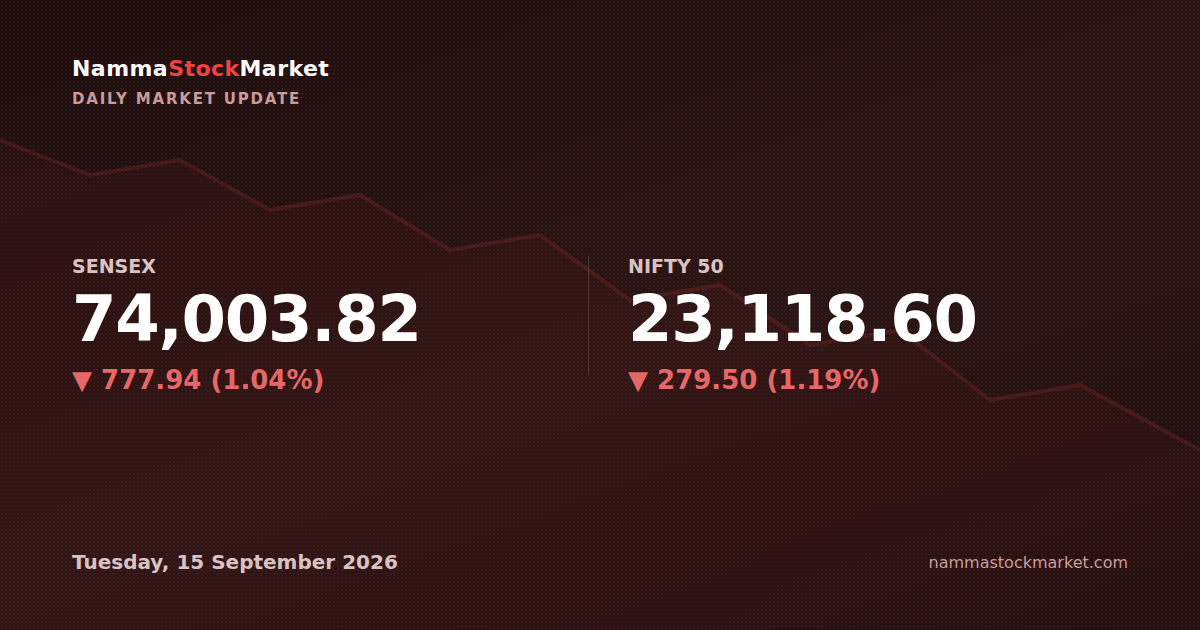
Sensex, Nifty Fall Over 1% as Crude Oil Surges; IT Stocks Buck the Trend
September 15, 2026 | by NammaStockMarket
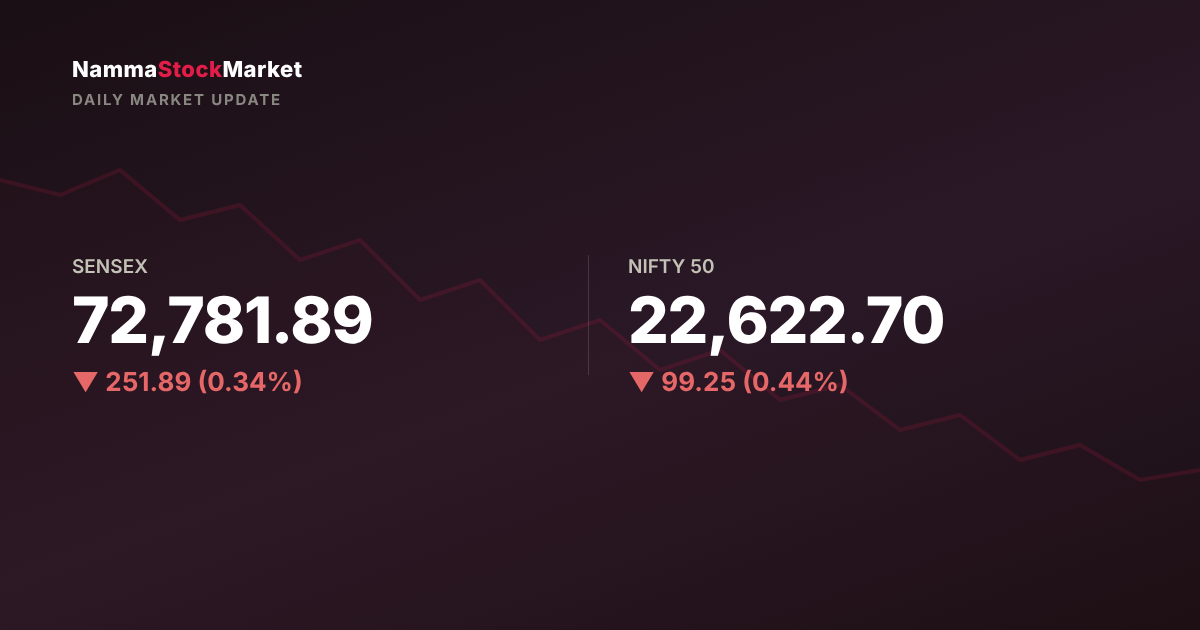
Sensex Falls 252 Points, Nifty Slips Below 22,650 As Crude Oil And FII Selling Hit D-Street; IT, FMCG Cushion The Fall
October 14, 2026 | by NammaStockMarket
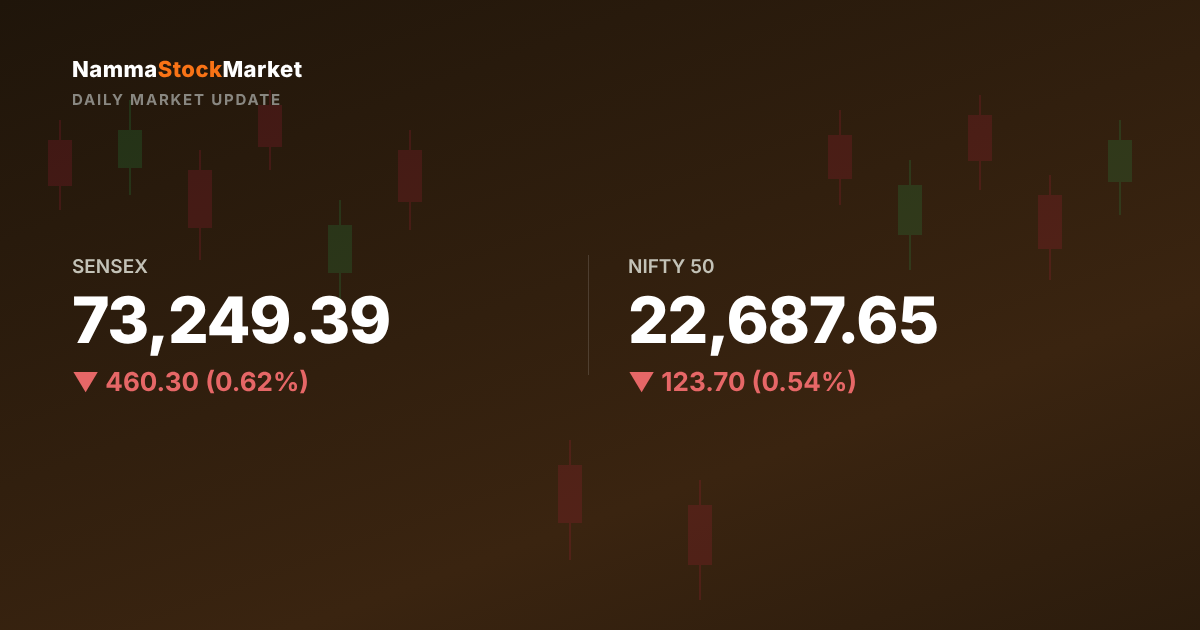
Sensex Falls 460 Points, Nifty Below 22,700 As Crude Oil Jumps Past $112 On Middle East Tensions
October 22, 2026 | by NammaStockMarket