

Sensex, Nifty Fall For 4th Day As Crude Oil Crosses $114; India VIX Jumps 6%, Midcaps Tumble
October 23, 2026 | by NammaStockMarket
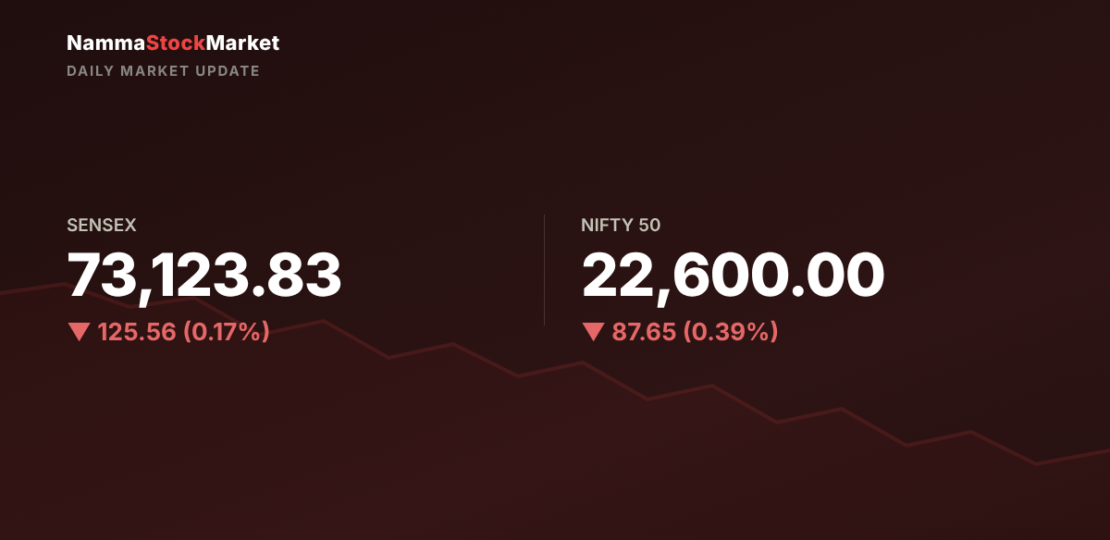
The Indian stock market closed lower for the fourth day in a row on Friday, and this time the pressure came from an old, familiar enemy for India: expensive crude oil. The BSE Sensex (the 30-share index of the Bombay Stock Exchange) ended at 73,123.83, down 125.56 points or 0.17%, while the NSE Nifty 50 (the 50-share index of the National Stock Exchange) slipped 87.65 points or 0.39% to close at 22,600. It wasn’t a crash by any means, but under the surface, the real damage was in midcap and smallcap stocks, which fell over 2% each, and in the fear gauge, India VIX, which jumped more than 6%.
If you’re someone who checks your portfolio every evening, today probably felt like a mixed bag. If you were holding IT stocks, you got away relatively easy. If you had metal, realty or consumer durables stocks, today was rough. The big story everyone’s talking about is Brent crude oil crossing $114 a barrel, its highest level in months, after reports of fresh attacks near Saudi Arabian oil infrastructure stoked fears of a bigger Middle East supply disruption. For a country like India that imports most of its oil, this is never good news, and markets reacted exactly how you’d expect.
Market At A Glance
| Index | Close | Change | % Change |
|---|---|---|---|
| BSE Sensex | 73,123.83 | ▼ 125.56 | ▼ 0.17% |
| NSE Nifty 50 | 22,600.00 | ▼ 87.65 | ▼ 0.39% |
| Nifty Midcap 100 | Not available | — | ▼ 2.21% |
| Nifty Smallcap 100 | Not available | — | ▼ 2.94% |
| India VIX (Volatility Index) | 16.77 | ▲ 1.01 | ▲ 6.4% |
Note: Exact closing index values for Nifty Midcap 100 and Nifty Smallcap 100 weren’t published in early market reports at the time of writing, so only their percentage declines are shown above. Bank Nifty’s separate closing figure also wasn’t confirmed in available reports by press time, though its two components — Nifty Private Bank and Nifty PSU Bank — are covered in the sector table below.
Why The Market Moved
Three things combined to pull the market down today, and it’s worth understanding each one because they’ll likely keep showing up in the news over the next few days.
First, and biggest, is crude oil. Brent crude (the global benchmark price for oil, quoted in US dollars per barrel) jumped close to $114.31 a barrel on fresh reports of attacks near Saudi Arabia’s oil facilities and continuing tension in the Middle East. Now, you might wonder why a price move in dollars thousands of kilometres away should matter to your demat account here in India. Here’s why: India imports more than 85% of the crude oil it uses. When oil gets expensive, our oil import bill goes up, which means more dollars flowing out of the country and more pressure on the rupee. It also means higher fuel and transport costs at home, which can push up inflation. All of this makes life harder for the Reserve Bank of India (RBI) and worries investors about company margins, especially for oil marketing companies and anyone who uses fuel or plastics as a raw material.
Second, India VIX — the India Volatility Index, often called the market’s “fear gauge” because it measures how much swing traders expect in the Nifty over the next 30 days — jumped 6.4% to close at 16.77. When VIX rises sharply like this, it usually means options traders are buying more protection (through puts) because they expect bigger price swings ahead. A rising VIX alongside a falling market is usually a sign that nervousness is building, not easing.
Third, there’s a broader global story. Technology and AI-linked stocks have been selling off on Wall Street over worries that valuations ran too far ahead of earnings, and that mood spilled into Asian markets overnight. Closer home, traders also pointed to valuation concerns and the unwinding of leveraged F&O (futures and options) positions in the mid and smallcap space, which is a big reason why those segments fell so much harder than the Sensex and Nifty.
Which Sectors Held Up, And Which Didn’t
| Sector (Nifty Index) | % Change |
|---|---|
| Nifty IT | ▼ 0.33% |
| Nifty Auto | ▼ 0.90% |
| Nifty Media | ▼ 1.12% |
| Nifty Private Bank | ▼ 1.13% |
| Nifty Pharma | ▼ 1.46% |
| Nifty FMCG | ▼ 1.46% |
| Nifty PSU Bank | ▼ 2.52% |
| Nifty Consumer Durables | ▼ 2.93% |
| Nifty Metal | ▼ 2.98% |
| Nifty Realty | ▼ 3.05% |
Pretty much every sector ended in the red today, but the gap between the best and worst performer tells its own story. Nifty IT was the only sector that barely budged, down just 0.33%, helped by a bit of global money rotating out of expensive AI stocks in the US and into reasonably priced Indian IT names like TCS and Infosys. Auto and media also held up comparatively well.
On the other end, Nifty Realty, Nifty Metal and Nifty Consumer Durables each fell close to 3%. Metal stocks got hit because a stronger dollar and global growth worries tend to weigh on commodity prices. Realty stocks are sensitive to interest rate expectations, and rising crude oil raises the odds that the RBI stays cautious on rate cuts for longer. Consumer durables took a hit after Colgate-Palmolive India’s results missed expectations, which spooked the broader FMCG and consumption basket a bit, even though that stock itself sits in a different index.
Today’s Top Movers
Top Gainers (Nifty 50)
| Stock | % Change |
|---|---|
| Eternal | ▲ 4.25% |
| Apollo Hospitals | ▲ 1.65% |
| ONGC | ▲ 1.11% |
| Asian Paints | ▲ 0.97% |
| TCS | ▲ 0.92% |
Top Losers (Nifty 50)
| Stock | % Change |
|---|---|
| Shriram Finance | ▼ 3.98% |
| Adani Enterprises | ▼ 2.86% |
| JSW Steel | ▼ 2.83% |
| Jio Financial Services | ▼ 2.74% |
| Tata Steel | ▼ 2.70% |
Eternal (formerly Zomato) was the standout gainer of the day, up over 4%, while healthcare and ONGC also found buyers — ONGC’s gain makes sense given it’s an oil producer that actually benefits when crude prices rise, unlike most of the rest of the market. On the losing side, Shriram Finance led the fall, down nearly 4%, with the Adani group stocks and metal names like JSW Steel and Tata Steel also under pressure as rising input costs and a risk-off mood weighed on them.
What FIIs And DIIs Were Doing
If you’re newer to the market, you’ll often see the terms FII and DII thrown around, so here’s a quick explainer. FIIs, or Foreign Institutional Investors (sometimes also called FPIs, Foreign Portfolio Investors), are big foreign funds and institutions that invest in Indian shares from outside the country. DIIs, or Domestic Institutional Investors, are Indian institutions like mutual funds, insurance companies (think LIC) and banks that invest money collected from Indian savers, including your mutual fund SIPs. Tracking what these two big groups are doing tells you a lot about where the “smart money” sees value.
| Date | FII Net (₹ Crore) | DII Net (₹ Crore) |
|---|---|---|
| 15 Oct 2026 | ▼ 5,285.37 sold | ▲ 3,319.39 bought |
| 16 Oct 2026 | ▲ 1,165.92 bought | ▼ 3,661.28 sold |
| 19 Oct 2026 | ▼ 1,148.64 sold | ▲ 3,201.19 bought |
| 21 Oct 2026 | ▲ 1,022.32 bought | ▲ 1,614.32 bought |
| 22 Oct 2026 | ▼ 3,458.70 sold | ▲ 2,891.32 bought |
Today’s official FII/DII cash-segment figures for October 23 weren’t out yet at the time of writing — NSE typically publishes provisional numbers only after markets close in the evening — so the table above shows the most recent confirmed sessions, with 20 October missing because markets were shut that day for Dussehra. The pattern over the last couple of weeks is a familiar one: FIIs have been net sellers on most days, while DIIs have been quietly absorbing a lot of that selling. For the month of October so far, FIIs have net sold about ₹52,353 crore worth of Indian shares, while DIIs have net bought about ₹55,875 crore. If you’ve put your money into a mutual fund SIP, this is exactly the kind of domestic buying that has been cushioning the market from a much sharper fall despite foreign investors pulling money out.
Oil, The Rupee, And Global Cues
Brent crude held near $114.31 a barrel today, its highest level in a good while, driven by renewed worries about Middle East supply after reports of attacks near Saudi Arabian energy infrastructure and ongoing tanker-related tensions in the region. As mentioned earlier, this matters a lot for India because of our heavy dependence on imported oil — every sustained $10 rise in crude adds meaningfully to our import bill and puts pressure on the rupee and on inflation.
That rupee pressure showed up today too. The USD/INR pair (how many rupees it takes to buy one US dollar) closed weaker, with the rupee ending around 94.94 to the dollar compared to a previous close of about 94.82 — so the rupee lost close to 12 paise in value. A weaker rupee makes imports, including oil, even costlier, which can create a bit of a vicious cycle if crude keeps climbing.
Globally, the picture was mixed. Wall Street’s AI-stock jitters weighed on Asian sentiment overnight, and Japan’s Nikkei 225 ended lower, while Hong Kong’s Hang Seng, Singapore’s Straits Times and South Korea’s Kospi managed small gains. Gold slipped slightly to a multi-month low as higher US bond yields reduced its appeal, while silver also fell. For Indian investors, the overall global cues were cautious rather than outright negative, but crude oil remained the dominant local worry.
What To Watch Tomorrow
There’s plenty on the calendar over the coming week that could move your portfolio, so here’s what to keep an eye on. The US Federal Reserve’s rate-setting committee meets on October 27-28, and a rate decision is due late on October 28 US time (which would land as breaking news in Indian markets around the night of October 28 or morning of October 29 IST). Markets are watching closely for any signal on whether the US central bank will cut interest rates, since a cut would typically be a positive for emerging markets like India as it tends to weaken the dollar and bring foreign money back into riskier assets.
Closer home, Reliance’s Jio Platforms IPO (Initial Public Offering) — India’s largest ever at about ₹30,213 crore — closed for subscription today, having been subscribed around 13.8 times by the afternoon. Its grey market premium (GMP, an unofficial indicator of listing-day demand that trades outside the official market) was hovering near ₹240, suggesting investors expect a strong listing. Allotment is expected by October 26, with listing on the NSE and BSE expected around October 28 — a day that will be busy anyway thanks to the Fed decision.
Q2 earnings season also keeps rolling through next week, with several large companies due to report results, which will keep stock-specific volatility high even if the index itself stays range-bound. Given today’s price action, the sectors that look most exposed if crude oil keeps climbing are oil-import-heavy names, paints, tyres, and anything with high fuel or logistics costs, while energy producers like ONGC and Oil India could continue to see some relative support. IT looks like the sector best placed to hold up if the rupee stays weak, since a weaker rupee is actually good news for IT exporters who earn in dollars. None of this is investment advice — just context for what’s driving the moves — so do your own homework or speak to a financial advisor before making any trading or investment decisions.
RELATED POSTS
View all

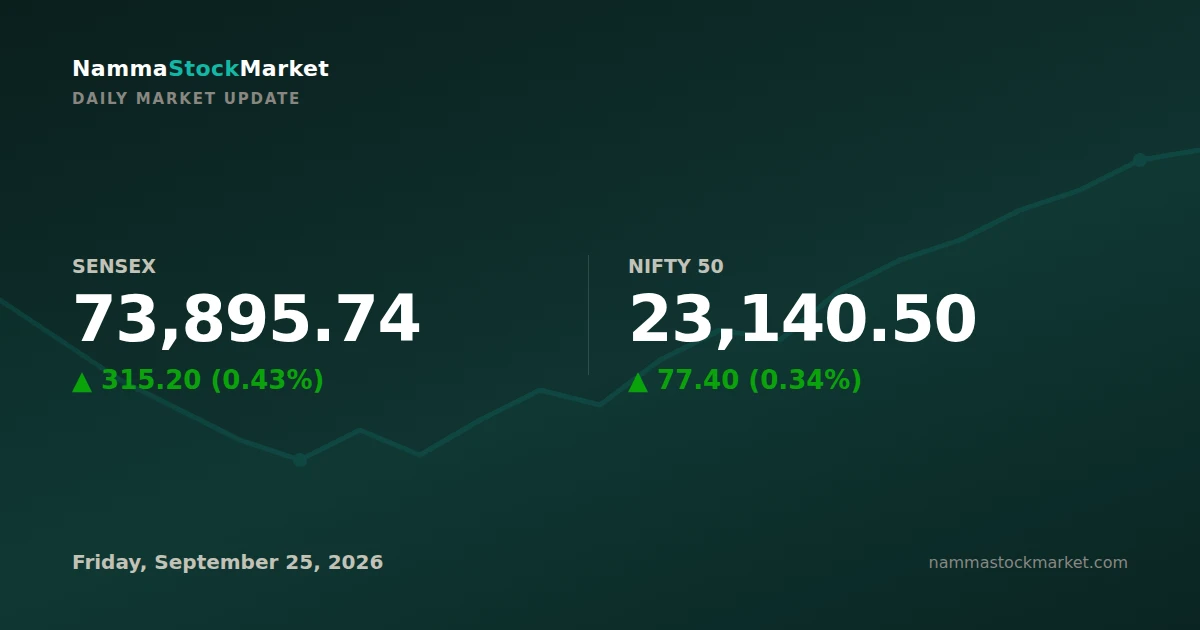
Sensex Jumps 315 Points, Nifty Back Above 23,140 As Bargain Buying Returns After Brutal Selloff
September 25, 2026 | by NammaStockMarket
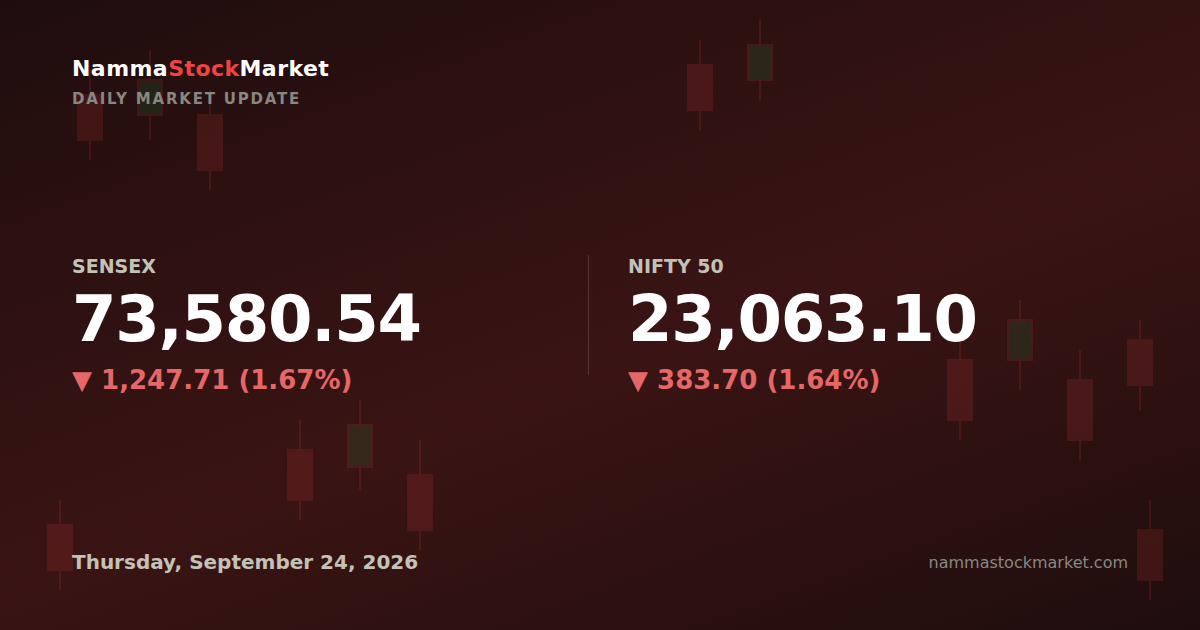
Sensex Crashes 1,247 Points, Nifty Slips Below 23,100 As Crude Oil Spikes And IRDAI Insurance Rules Hit Bank Stocks
September 24, 2026 | by NammaStockMarket
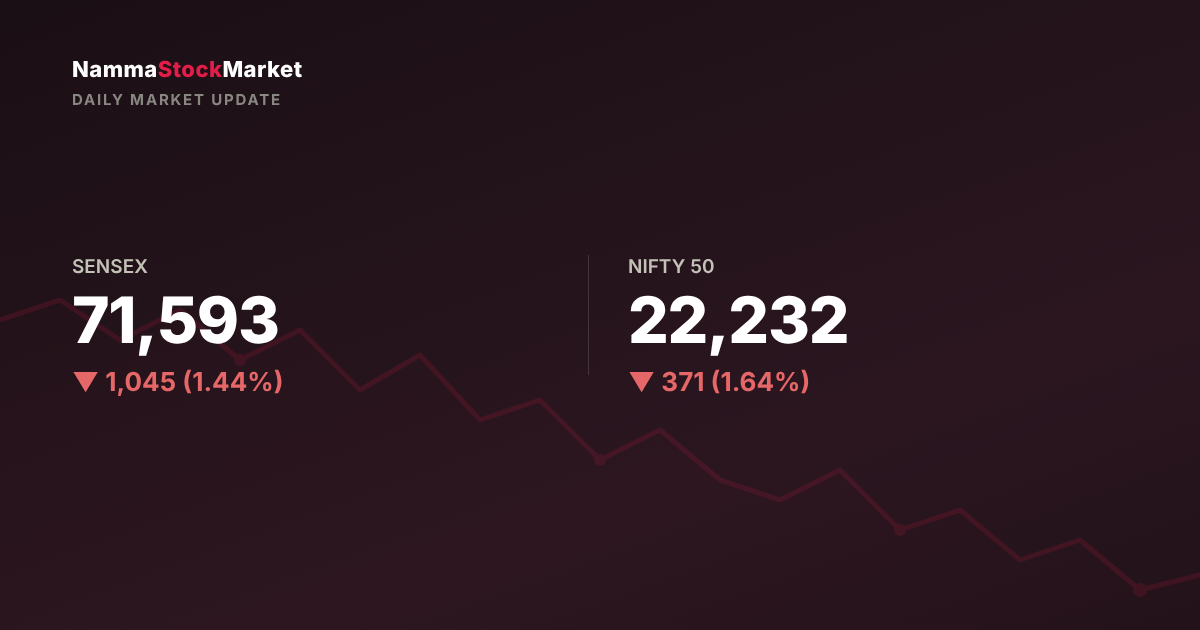
Sensex Crashes 1,045 Points, Nifty Below 22,250 As RBI Rate Hike And $104 Oil Spook Indian Stock Market
October 8, 2026 | by NammaStockMarket